Student Loan Debt Hits $1.7 Trillion — How Online Degrees Can Reduce Borrowing
Student loan debt in the United States has reached crisis levels. Recent data shows total student loan balances exceeding $1.75 trillion, reflecting a dramatic rise over the past decade. With millions of Americans carrying education-related debt, students are increasingly searching for smarter, more affordable pathways to earn a degree. One of the most effective solutions gaining momentum is online education.
Online degree programs offer flexibility, lower costs, and the ability to maintain employment — all of which can significantly reduce the need for student loans. Below is a detailed look at the current debt landscape and how online learning can help students borrow less while still earning a high‑quality credential.
The Growing Weight of Student Loan Debt
The scale of student loan debt is staggering. According to recent figures, U.S. student loan debt stands at over $1.75 trillion, with balances having increased 66% in the past decade. Federal student loan borrowers alone owe more than $1.67 trillion, and the average federal loan balance per borrower is approximately $39,375.
These numbers highlight a system where traditional higher education costs continue to rise faster than wages, pushing more students to rely on loans. As a result, many graduates face years — sometimes decades — of repayment.
Why Online Degrees Are a Smart Financial Alternative
1. Lower Tuition Costs
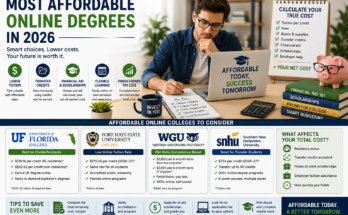
Online programs often cost significantly less than on‑campus degrees. Many universities reduce fees for online learners because they don’t require physical classroom space, campus services, or housing. This can translate into thousands of dollars saved over the course of a degree.
2. No Room and Board Expenses
Traditional college students often pay $10,000–$15,000 per year for housing and meal plans. Online students can eliminate these costs entirely by studying from home.
3. Ability to Work While Studying
One of the biggest advantages of online learning is flexibility. Students can maintain part‑time or full‑time employment, reducing the need to borrow for living expenses. This is especially valuable for adult learners, who make up a large portion of online students.
4. Faster, Accelerated Programs
Many online degrees offer accelerated formats, allowing students to graduate in 12–24 months instead of four years. Finishing faster means paying less tuition overall and entering the workforce sooner.
5. Reduced Hidden Costs
Online students avoid commuting, parking fees, campus activity charges, and other small expenses that add up quickly in traditional programs.
Who Benefits Most from Online Degrees?
Online degrees are particularly beneficial for:
- Working adults who need flexibility
- Parents balancing family responsibilities
- Career changers seeking affordable upskilling
- Students in rural areas without access to nearby universities
- Budget‑conscious learners aiming to minimize debt
Given that 54% of bachelor’s degree students graduate with student loans — averaging $29,100 in debt — the ability to cut costs through online learning is more important than ever.
The Bottom Line: Online Degrees Can Meaningfully Reduce Borrowing
With student loan debt surpassing $1.7 trillion, the need for affordable education alternatives is urgent. Online degree programs offer a practical, cost‑effective solution that can dramatically reduce the amount students need to borrow. Lower tuition, fewer living expenses, and the ability to work while studying make online education one of the most powerful tools for avoiding excessive student debt.
If you need to apply for financial help with your studies, see our article on getting aid from FAFSA
For students looking to protect their financial future, an accredited online degree may be the smartest investment they can make.